
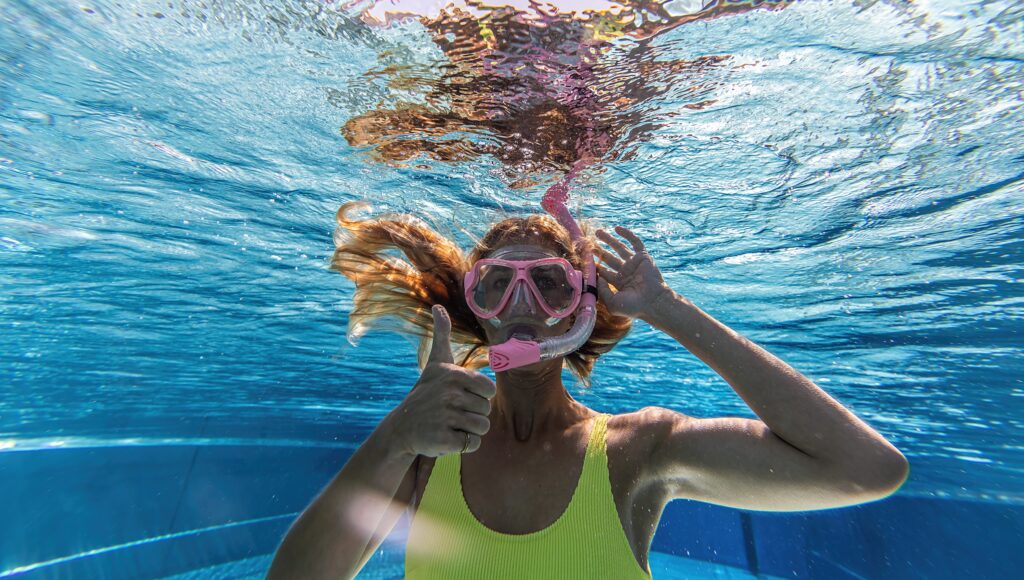
Introduction to sports performance and its importance
Sports performance is a quality that every good athlete, whether recreational or professional, strives for. Improving times, maximum speed, oxygenation capacity or endurance are some of the characteristics related to enhanced sports performance in any athlete. There are supplements to improve certain characteristics related to sports performance, such as creatine, caffeine or nitrates, among others. But today we are not going to talk about that. Today we are going to talk about a way of training to improve sports performance that will leave you breathless: apnea training!
When we refer to apnea, it does not necessarily have to be practiced in water environments. There are different ways to perform apnea training. First of all, we need to know the two most important types of apnea: diving apnea, practiced in water, and dry apnea, practiced outside the water. In both cases, it can be trained in different ways, from static exercises to dynamic exercises, and even including weights in the aquatic modality.

Physiological mechanisms and responses during apnea exercise
In an apnea exercise, a series of mechanisms trigger several physiological responses. First of all, even in dry conditions, the so-called “diving reflex” triggers bradycardia (a decrease in heart rate) strong enough to counteract the exercise-induced increase in heart rate (HR) produced while performing apnea exercise. In addition, this effort causes peripheral vasoconstriction, allowing a greater concentration of blood in the lungs and maintaining constant gas exchange of O2 and CO2, ensuring the necessary oxygen supply to key organs such as the brain and the heart.
Metabolically, these changes cause an accumulation of lactate in the blood and muscles due to the lack of oxygen to metabolise it. This lactate build-up is usually associated with muscle fatigue. An example of how far this mechanism can be pushed is that of trained divers, who during a maximal apnea can reach oxygen saturation levels as low as 30%, causing splenic contractions (of the spleen) and increasing the number of circulating red blood cells.
But how does this translate into practice? Does it really have benefits for sports performance? Let’s find out!

Benefits of apnea training for sports performance
Several studies have demonstrated the effectiveness of apnea training in improving sports performance, but how was it carried out? Some studies forced athletes to train at 30% below their VO2 max, achieving improvements in both dynamic and static exercises. Other professionals have shown that performing five repetitions of maximal breath-hold apnea before physical exercise significantly increases the time to reach fatigue in high-intensity sports.
Genetic influence on sports performance and hypoxia
Even genetics has something to say about this characteristic. There are studies associating the presence of certain genetic variants with performance and hypoxia. Genes such as AMPD1, C34T, ADRB2, AR and even the well-known ACE I/D show a clear association between sports performance and hypoxia, demonstrating that certain individuals could benefit even more from this type of training than others, with proven benefits in sports such as mountaineering, maximal oxygen uptake (VO2max) or running performance at sea level.
In conclusion, it seems that hypoxic training through apnea, both dry and in water, is a very practical type of training to improve sports performance, not only because of the metabolic and physiological changes it induces in our body, but also because of its clear effect on athletic performance. So if you are left breathless, you are improving your performance!

References
Fornasier-Santos C, Millet GP, Woorons X. Repeated-sprint training in hypoxia induced by voluntary hypoventilation improves running repeated-sprint ability in rugby players. Eur J Sport Sci. 2018 May;18(4):504-512. doi: 10.1080/17461391.2018.1431312. Epub 2018 Feb 5.
de Asís-Fernández F, Sereno D, Turner AP, González-Mohíno F, González-Ravé JM. Effects of apnoea training on aerobic and anaerobic performance: A systematic review and meta-analysis. Front Physiol. 2022 Sep 27;13:964144. doi: 10.3389/fphys.2022.964144.
Lemaître F, Joulia F, Chollet D. Apnea: a new training method in sport? Med Hypotheses. 2010 Mar;74(3):413-5. doi: 10.1016/j.mehy.2009.09.051. Epub 2009 Oct 21.
Mulder ER, Holmström PK, Schagatay EK. Effects of dynamic apnea training on diving bradycardia and short distance swimming performance. J Sports Med Phys Fitness. 2022 Aug;62(8):1037-1044. doi: 10.23736/S0022-4707.21.12549-6. Epub 2021 Sep 21.
Vitali L, Raffi M, Piras A. Acute Cardiovascular and Metabolic Effects of Different Warm-Up Protocols on Dynamic Apnea. J Sports Sci Med. 2022 Jun 1;21(2):298-307. doi: 10.52082/jssm.2022.298.
Hennis PJ, O’Doherty AF, Levett DZ, Grocott MP, Montgomery HM. Genetic factors associated with exercise performance in atmospheric hypoxia. Sports Med. 2015 May;45(5):745-61. doi: 10.1007/s40279-015-0309-8.